

How you use your attention in waking life has definite effects in your dreaming life. The following is my distillation of some insights from anthroposophy in this regard, which I offer as one way of looking at this phenomenon, specifically around the issue of video games and dreaming. This post should provide an appropriate background if necessary.
If people are comfortable with the terms, we can talk about how the astral body (the subtle body that allows something outside to become something for us inwardly; i.e. the sense-body, which we share with animals) gains its content in large part by reflecting itself off of the etheric body (the less subtle body that keeps your body from becoming a corpse, which we share with the plant realm).
When you spend hours of time focusing your senses on particular stimuli (i.e. a video game) your are patterning your etheric body through physiological repetitions: the movements of your eyes, hands, breathing, etc., and more importantly in the endocrine responses and other physiological changes that go along with the particular game experience. Knowing why this is important needs a little background first.

When you go to sleep, and you are no longer imposing your astral body on your etheric (i.e. choosing where to direct your attention and what sensations you will seek and avoid) your etheric body starts to “digest” all this activity that happened during the day. This digestion is like a reverse-engineering, it is a sort of inversion of the processes that occurred during the day because of what you did while you were awake.
From this perspective, what sleeping is has to do with the way the astral body (along with the “I” or “ego) detach from the physical and etheric bodies (although not completely, which is what death is). Dreaming occurs when the astral and ego dip back into the etheric a little, but not all the way back into the physical (in which case you wake up).
Because the content of the astral body is primarily supplied by reflecting itself off of the activity of the etheric body, what the etheric body is doing changes what becomes available as sensations for the astral body. This is true all of the time, but there is a difference in this relation when awake and when asleep, and when dreaming (and also lucid dreaming) as well.
In waking life the etheric and physical bodies are directed, even “used” (or used up!) by the astral and ego, and the close links between these two groups means that almost all sensations (via the astral body, directed more or less by the ego) are directly linked to purely physical events or etheric processes (hunger, elimination, and so forth are the most obvious).
But when sleeping the astral and ego are no longer directing the show back in the physical and etheric bodies; the etheric body is free to do its work of getting everything ready for the next day (repairing tissues, cleaning the blood, glycolosis in the liver, etc.). The wisdom of the physical and etheric bodies is such that a lot of this building-up activity happens earlier in the night. This can be seen as an esoteric “reason” for why non-REM sleep is greater earlier in the night and REM sleep increases later.
 The point is that how you structure your attention during the day (and what activities you therefore engage your etheric body in) has definite effects during sleep. Much of the effects can be dealt with by your etheric body in non-REM sleep, but it can’t do it all in one sleep cycle, so when your astral body and ego dip back down into the etheric body (resulting in a dream), and the astral body uses the etheric body to reflect itself to the ego (for conscious experience), whatever the etheric body is doing at the time changes (to continue the metaphor) the shape of the mirror, which modifies the reflected image of the astral body to the ego. In other words, some dreams (most, actually) are the kind where the astral body is having to deal with what is leftover in the breaking down of patterns that got imprinted on the etheric body during the day. You literally then “dream your body-processes”.
But your astral body is a sense-making body; it builds sensory images, or what is poorly referred to in cognitive science as “representations” (it is way more than representing; it is creating, synthesizing, organizing, filtering, elevating, discarding…). So when your astral body dips into the etheric and uses it to “see” itself, it forms sensations (in the dream) out of the etheric activity that is going on at that time. Basically your astral body gets to peek in on the activity of the etheric body and turn it into imagery. This is why it can be really hard to predict what dream images actually form on the basis of day-waking activity. The more structured and repetitive the attention in daily life, the more likely the dream imagery will be a working through (a digestion) of this activity, a dismantling of it, a “dealing with” it. The term “images” means visual images, yes, but is also much wider in scope: sensory images can include all senses, it is also the feeling of what an experience is “like”.

The astral body has its own patterns (protocols for avoidance of and seeking for particular sensations cascades). And it will generate imagery that is derivative of the day-waking sensation patterns. If the astral body meets the etheric body, which is digesting the patterns associated with playing a video game in waking life, the astral body is more likely to generate sensory images in the dream that fit that activity, and this MAY take the form of actual game imagery, but may not. The root is not the image itself but the activity upon which it rests in the etheric body; many possible images can be formed when the astral body meets the etheric in a dream (this is why any book that claims to be able to interpret your dreams by telling you what each symbol means is likely false; this is, however, an issue that needs a separate discussion).
The upshot of all this is that you can utilize the relationship between the physical, etheric, astral, and ego bodies in skillful ways. To begin with you can simply see for yourself how structuring your attention in the day can change your dream life. In more extreme cases you can even see the effects of this _before_ sleep onset. If you play a game for three hours just before bed, then when you get into bed you will likely find that as soon as you relax the conscious focusing your attention, game imagery will fill your mind without your bidding. You may even find it very difficult to NOT experience the continuation of game imagery as you are lying in bed, trying to fall asleep. Whereas normally you may be able to direct your attention in a focused way to this and then that idea or sensation, now you have to spend all that effort just to not experience game imagery, and it creeps back in as soon as you relax your attention at all. You have created a pattern in your etheric and astral bodies that continues without any effort now on your part; now you have to “deal with” the consequences of this patterning. This is important because there is a whole lot of other things that could occupy your attention, but they are literally drowned out by the large amplitude of the patterns in the etheric and astral. All that is subtle (other aspects of your day that might present opportunities for deeper reflection) still takes place, but you don’t notice it anymore. You have to work through the biggest and most obvious stuff first, and because you just sat down for three hours of really focused time, concentrating on a game, you essentially have told your etheric and astral bodies that this must be super-important!
These effects continue during sleep, but the difference here is that what can potentially occur during sleep is even more subtle than what happens during the day when sensations are linked so strongly to whatever the physical body is doing. This is where the “spiritual” realms come to the fore, and THIS is what makes a difference for people interested in spiritual development, and who also happen to play games (I am one of these people — Skyrim, oh, Skyrim!). A real tension is set up between being able to utilize sleep as a sacred space for spiritual work and the day-waking desire for fun and escape.
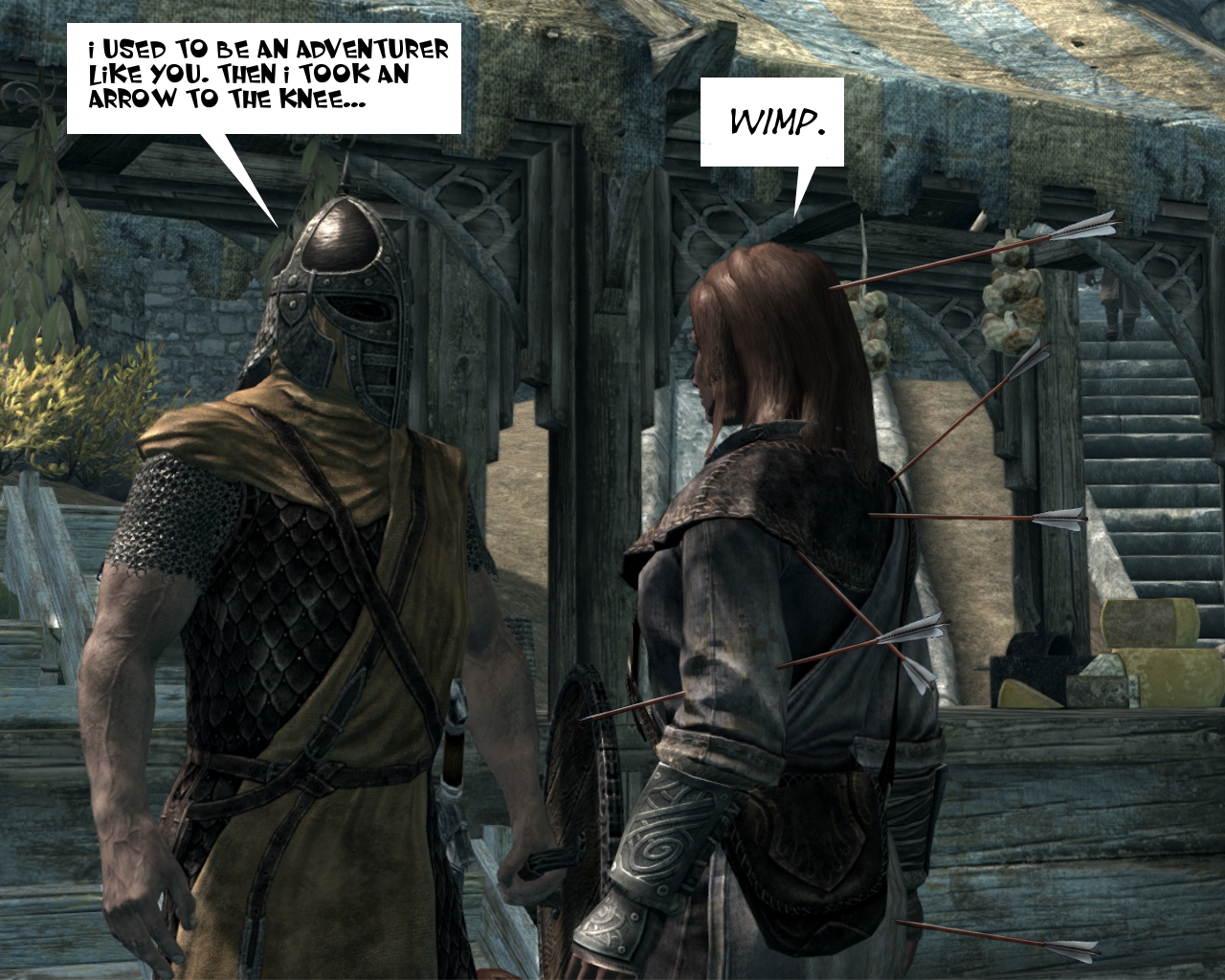
But recognizing this means that we can take steps to be wiser about how we structure our attention, rather than simply letting the physical world and your etheric needs lead our attention around, so that our astral body and ego spend all their time reacting and playing catch-up with the world. Meditation is the archetypal training for this, and is superior to video games by orders of magnitude in the sense of its ability to create a free capacity for directed attention. We can sensitize ourselves to the effects of the habits we have around structured attention in the day by monitoring our dream life, which then is like a tableau upon which our spiritual work of the day gets played out in sensory images. Recognizing this link opens the door to more subtle and complex and transpersonal use of dreams and sleep life, which can be of great use for those on a path of self-development.


Comments
11 responses to “Sleep, Dreams and Video Games”
I saw this reply on Dreamviews to the lucid dreaming/video games article posted there. I thought it was very intriguing and now feel obligated to learn a little bit about theosophy so I’m not so clueless about these various terms. Any book recommendations? I’ve always been a bit hesitant to pick up anything by Blavatsky because to me she’s always reeked of charlatanism.
Hi Steven,
If you are interested in learning more about the terms, the book I’d recommend is Theosophy by Rudolf Steiner (available for free at http://www.rsarchive.org/Books/GA009/). I agree with you about Blavatsky; too much tied up with personality. If you want a more intimate and practical book, you can go for How to Know Higher Worlds (a.k.a. Knowledge of Higher Worlds and its Attainment, by Steiner, also free at http://www.rsarchive.org/Books/GA010/). If you are more into the philosophical and epistemological underpinnings of the whole thing, then read The Philosophy of Freedom (a.k.a. The Philosophy of Spiritual Activity), http://www.rsarchive.org/Books/GA004/.
Cheers!
-Seth
Oh man. I go nuts for free esoteric books (or online documents). Thanks kindly, Seth! I look forward to perusing all the other fascinating articles you have posted on this website.
Hello.
So, please, be specific on this: do you think video games are detrimental or helpful to your endeavours?
Cheers
Great question: right to the point.
I can _only_ answer for myself, so I’m not assuming what holds for me will be true for everyone. I’m also not of the opinion that it has to be only either detrimental or helpful, but I can say that for the most part it would fall on the detrimental side. I’m also going to take this opportunity to explore more deeply what is happening with video games, in order to give a better context for my answer. Please see this new post to see why I think games are primarily detrimental to spiritual development.
[…] to the first chapter of Rudolf Steiner’s book Theosophy (available free here). Additionally, some context for this post is laid out in another post, on Sleep, Dreams, and Video Games, in which I explore the basic phenomenon of sleep in connection with video games and spiritual […]
Hi Seth,
does Steiner give the idea that some experiences somehow develop the ego? It never made sense to me though I can recognize a similar idea in Gurdjieff.
Heiki
Hi Heiki — I think the short answer to your question is ‘yes’… but I’d need a little more clarity about what you mean with the question in order to be sure!
The ego (the “I” being…) develops itself through experience in general, i.e. by being incarnated. However, different experiences develop the “I” differently, and the key is to ask “how?” Meditating on peace, focusing on a single hygienic image, doing projective geometry, reading philosophy… all these things, as activities of the “I”, do something to the “I” as well. The “I” develops itself through experience, and what this means is that the “I” expands its capacities to experience differently, more subtly, more complexly.
This is my understanding, at least!
Thanks Seth!
I guess one of the reasons why it doesn’t make sense to me that ego would develop at all, is that an individuality is still supposed to stay the same, explicitly contradicting Buddhist view that the self is just a bundle of experiences. What then is individuality if even the ego is changing?
I appreciate discussing this matter.
Ah, I see. There is something of a (very nice) paradox at work here. How can something both change and stay the same? Am I somehow the ‘same’ me now even though I have changed so much in my life? It’s something of a mystery, but that doesn’t prevent us from thinking about it… here is one way to approach it: On the one hand we have a sense of the individuality of our “I” being — and it is this that develops. As it develops, however, part of that development involves the “I” being becoming more universal in its scope, its connections, its way of relating… the part of the “I” being that universalizes itself (not abstractly but in an esoteric sense) has an effect in terms of the stability of the ‘individuality’ from incarnation to incarnation. The thing about ‘individuality’ is that by virtue of being less than the whole, it is necessarily subject to change. Anything that can be described in such a way as to be differentiated from any other thing means that change is possible for that thing.
So I would argue against the idea that there “is” an “individuality” that is somehow NOT subject to change. Rather, the question is more: how exactly is it subject to change? What processes influence it? What processes does it depend upon to be stable in order for it to change?
I want to get away from an object-oriented ontological model in which things are somehow discrete and independent — and the Buddhist view helps a lot with its insistence that what Maya is IS the fact of being a) separated from the whole (i.e. having ‘existence’) and b) therefore subject to change. Rosicrucian-ally, this is captured in the phrase “this too, shall pass”…
And as for Steiner, we could say that every being–by virtue of NOT being some other being–is therefore part of the bigger cosmic drama unfolding, and is subject to change. If you are a member of the cosmic hierarchy, you are part of that drama.
I’m not sure if I’m really addressing your question, so let me know if I’m off the mark!
Thank you Seth, you clarified some really interesting preliminary points even if I, too, am more interested more in the ‘how’ of development. The explanation seems logical and sound.
1) You refer to reading philosophy as doing something to the ‘ego’. At the same time in spiritual circles in general there is a lot of criticism towards intellectual effort as not conducive to… whatever it is that growth consists of. In anthroposophical circles it is more complicated as intellectualizing on Steiner is exempt from any criticism but in general it is easy to get shot down on ‘ahrimanic abstract intellectualizing’.
2) At the same time, in these very same spiritual circles, ‘experience’ is put an importance on, often without discrimination as to what might be worthwhile, repetitive middleclass activities and gatherings, Cosmopolitan-style promiscuous serial relationships, mishaps of fate are all recontextualized as ‘experience’, even though more fringe ‘experiences’ like psychedelic/entheogen trips or sexuality beyond the Cosmopolitan, possibly even of a criminalized kind, or possibly other acts that are illegal, are less easily labeled as ‘experience’.
So based on these observations and the prior discussion, I would like some comments, if you like, on the following:
– is there a difference as to intellectual part and the life experience part of ‘experience’? I am thinking they might possibly tie together with the PoF distinction between concept and percept.
– how to evaluate the value of intellectualizing?
– how to evaluate the value of life experiences, would some kind of morality and ‘ethical individualism’ be of value there?
– it does appear that sitting on one’s ass looking out the window is also an ‘experience’ though it is difficult to find a sane justification why it would develop the ego. would that be a valid claim?
– also, the role of feedback received by the spiritual groups we participate in, usually sharing distinct belief systems, could be discussed :)